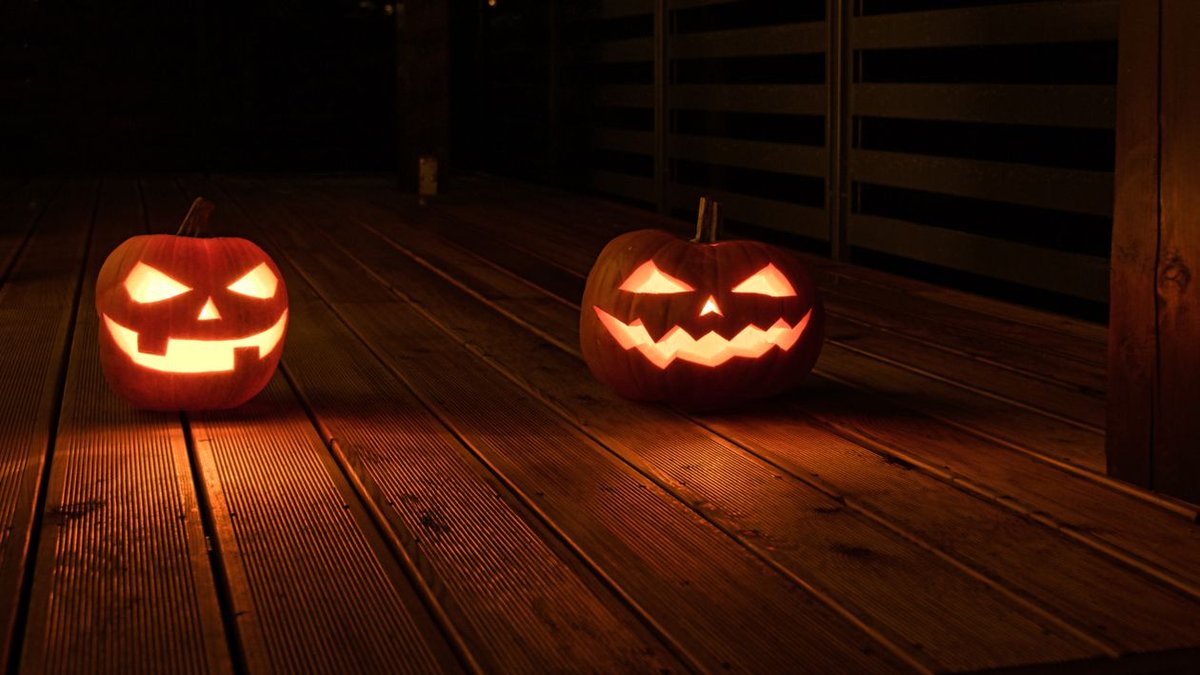
There is a particular kind of Halloween light that does not come from a shop. It comes from a vegetable that has been hollowed out, given a face, and lit from inside with a candle or with embers, and then set where it can be seen in the dark. For a long time in Britain, that vegetable was not a pumpkin. It was a turnip, or another seasonal root vegetable, and the light it gave was smaller, stranger, and harder won than the glowing orange lanterns that now stand on doorsteps.
The occasion for this entry is a seasonal event, not an endorsement of it. At Blists Hill, in Ironbridge Gorge, an All Hallows event runs from Saturday 17 October to Sunday 1 November 2026, with costumed interpreters telling tales of witches, ghosts, and age-old superstitions. The event, as reported on 15 and 16 October 2026, also features trails about witch marks and fairies, and harvest traditions linked to local folklore. It is a useful hook because it gathers, in one place, three things that are often treated separately: the lantern, the mark, and the fairy. In older belief, they belonged together, because they were all ways of managing the same season — the point in the year when the harvest was in, the nights were lengthening, and the boundary between the living and the dead was thought to be thinner than usual.
Victorians, as described in the reporting around the event, carved scary faces into seasonal vegetables such as turnips and placed a candle or embers inside, to ward off evil spirits and wandering ghosts, at a time when spirit activity was thought to be particularly strong. That sentence contains a whole worldview in miniature. The face was not decoration. It was a defence. The light was not for seeing by. It was for keeping something away. And the season mattered: the lantern was not an all-year object, but a seasonal one, made when the year itself seemed to be turning toward darkness.
The turnip, and then the pumpkin
A turnip lantern is, by any practical measure, an awkward object. It is smaller than a pumpkin, harder to hollow, and its light, when it is lit, is pinched and uneven, coming through a narrow face cut into a dense root. That awkwardness is part of the point. A turnip lantern looks unsettling in a way a pumpkin lantern often does not, because the face is cramped, the features are close together, and the whole thing seems to be grinning through a mouth that is too small for it. It is easy to see why such an object would be thought to frighten something away. It is also easy to see why, when a larger, softer, easier vegetable became available, people switched.
Pumpkins arrived in England in the sixteenth century, but carving them into jack-o'-lanterns only became popular in the 1980s and 1990s, according to the reporting around the Blists Hill event. That gap — roughly four centuries between arrival and popularity as a lantern — is the most instructive fact in this whole story. It tells us that a tradition does not change simply because a new material appears. It changes when the new material fits a new way of celebrating: a larger lantern, a simpler carve, a brighter light, and a Halloween that is more about display and less about defence. The pumpkin did not replace the turnip because it was more traditional. It replaced it because it was easier, and because the season itself had changed its meaning.
It is worth holding both lanterns in mind at once. The turnip belongs to a Halloween in which the main business was protection: keeping spirits out, marking a threshold, making a light that would be recognised, by whatever was wandering, as a warning. The pumpkin belongs to a Halloween in which the main business is often enjoyment: a carved face on a doorstep, a light that invites visitors rather than repelling them, a season that is celebrated rather than endured. Neither version is more authentic than the other. They are different answers to different questions, asked at different times, in the same season.
Witch marks, and the idea of a protected place
The trails at Blists Hill also take in witch marks, and it is worth saying plainly what those marks were understood to be. They were protective marks, made in buildings — on walls, beams, and doorframes — to guard a place against witchcraft, evil spirits, and bad fortune. They were not, in the belief of the people who made them, decorations. They were a kind of writing, made where it would be seen by whatever it was meant to deter, and made in the hope that a marked place would be passed over.
That hope is easy to dismiss from a modern distance, and it is also easy to misunderstand. A witch mark was not a claim that the maker could control the supernatural. It was a claim that a house, a barn, or a room could be prepared, in the same way that a lantern could be prepared. The mark, like the lantern, was a seasonal and domestic act: small, local, made by hand, and placed where it mattered most — at a threshold, a fireplace, a bedchamber, a place where people were vulnerable at night. To understand witch marks, it helps to think less about witches as figures in a story, and more about the anxiety that made people want to mark their own walls. The mark is evidence of worry, and worry, in a house without electric light, without a locked and alarmed door, and without a clear explanation for sudden illness or bad luck, was a reasonable response to the world as it was experienced.
There is a connection here with the lantern that is often missed. Both the lantern and the mark use light and line to draw a boundary. The lantern draws it with fire, at the edge of the house or the garden. The mark draws it with a carved or scratched sign, at the edge of a room. Both assume that a boundary can be made, and that making it matters, even if the thing it is meant to keep out cannot be seen. That assumption — that a small, deliberate act can change the safety of a place — runs through a great deal of older folklore, and it is not as distant from modern habits as it might seem. People still lock doors, leave lights on, and place objects at thresholds for reassurance. The forms have changed. The impulse has not entirely gone.
Fairies, and belief as a way of living
The third strand in the Blists Hill trails is fairies, and here the same care is needed. Fairy lore, in this archive, is treated as belief, not as proven fact. That distinction matters, because it is the difference between recording what people thought and endorsing what they thought as true. People in earlier centuries did not, for the most part, treat fairies as a charming decoration for a children's story. They treated them as neighbours of a difficult kind: powerful, capricious, and best handled with care, with offerings, with politeness, and with a clear sense of what not to do.
Harvest traditions linked to local folklore belong in the same picture. Harvest was not only a time of gathering food. It was a time of settling accounts with the land, with the season, and with whatever forces were thought to govern whether a crop succeeded or failed. A fairy trail at harvest time, in that context, is not a whimsical extra. It is a way of remembering that the harvest was once understood as a negotiation, not merely a production process. The last sheaf, the first fruits, the offerings left at a boundary — these were ways of acknowledging that human work alone did not explain a good or a bad year.
It is tempting, with fairy lore, to tidy it into a single, coherent system, with rules that can be listed and followed. The older material resists that tidying. Fairy belief varied by place, by family, and by occasion. What was true in one village might be doubted in the next. What was feared at one season might be welcomed at another. That variation is not a flaw in the record. It is the record. Belief, in this period, was local, practical, and often contradictory, because it was a way of living in a particular landscape, not a textbook to be memorised.
A season, not a single object
Put the three strands together — the lantern, the mark, and the fairy — and a different Halloween emerges from the one that is usually pictured. It is not a single night, and it is not a single object. It is a season, running through the end of October and into the beginning of November, in which light, marks, stories, and harvest customs all did related work. The lantern kept something away. The mark protected a place. The fairy stories explained why care was needed, and what might happen if it was not taken. The harvest traditions gave the whole season a material anchor: food gathered, work finished, and a year turning.
That seasonal view also explains why the Blists Hill event, as a news hook, is useful without being an advertisement. An event that gathers costumed interpreters, tales of witches and ghosts, trails about witch marks and fairies, and harvest traditions is not inventing a new Halloween. It is staging, in a concentrated form, a set of practices that were once spread across households, fields, and churchyards. Whether a visitor finds that staging convincing is a separate question, and this entry does not answer it. What matters for the archive is that the practices themselves — the carved root, the protective mark, the fairy as a figure of belief — are real parts of the historical record, even when the beliefs behind them are not shared today.
And that, in the end, is the turnip's lesson. A tradition is not preserved by keeping its objects unchanged. It is preserved by understanding what those objects were for. A turnip lantern, a pumpkin lantern, a witch mark scratched into a beam, and a story told about fairies at harvest time all belong to the same history, not because they look alike, but because they were all attempts, in different forms, to make a darkening season a little safer, a little more legible, and a little less lonely.
An archivist's note
An entry like this one is useful only as far as its sources will carry it. Where the record is a report, an event listing, or a later account working from those sources, the entry stays close to what that kind of record can actually show. Where the record is thin, contested, or built on a story that has been retold until the retelling has become the evidence, the honest move is to mark the gap rather than fill it with a neater version.
That is the habit this archive tries to keep. Strange history does not need to be made stranger. The original material is usually strange enough, and the places where it breaks, contradicts itself, or stops short are often the most instructive parts. A reader who leaves an entry knowing both what happened and how confidently we can say it happened has been given more than a reader who leaves with a smooth story and no sense of its edges.
Sources, in plain text: Visit Telford / National Trust Blists Hill All Hallows, October 2026 (event 17 October to 1 November 2026, as reported 15–16 October 2026). This entry treats the event as a news hook, not as an endorsement or advertisement. Corrections are welcome. If a source named here has been misread, or if a better source exists, write to the correspondence address on the contact page. A correction that changes the meaning of an entry will be noted in the entry itself.